

On Wednesday, Tel Aviv-based startup Sett officially emerged from stealth mode, securing $27 million in total funding to expand its AI agents designed to build and manage mobile games and marketing campaigns.
The total investment was closed across two tranches, anchored by a recent $15 million Series A round led by Bessemer Venture Partners. Additional participation included Saga VC, vgames, F2 Venture Capital, and Akin Babayigit—founder of UK gaming unicorn Tripledot and head of Arcadia Gaming Advisors. Sett previously raised $12 million in seed funding from F2, Bessemer, and prominent gaming industry angel investors.
Backed by Top Mobile Gaming Publishers
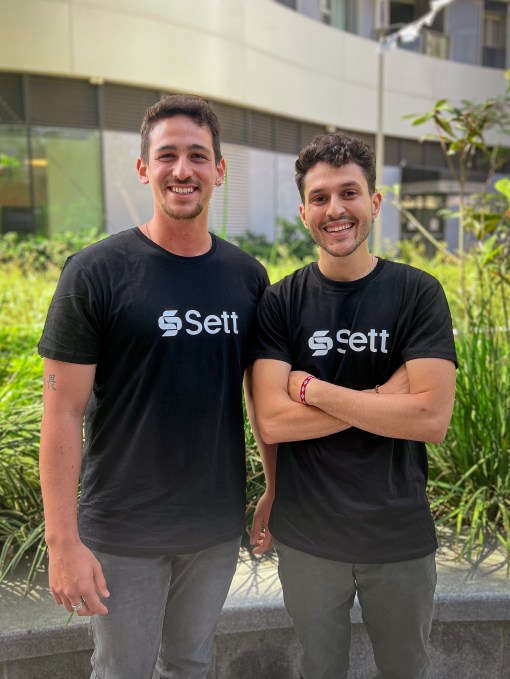
Co-founded in 2022 by CEO Amit Carmi and CTO Yoni Blumenfeld, Sett operated under the radar to refine its technology and build a solid client portfolio. Today, the company’s customer list includes major industry players such as Zynga, Scopely, Playtika, SuperPlay, Rovio, Plarium, Candivore, and Unity. Despite revealing a public site five months ago, Sett is keeping its marketing modest, choosing instead to deploy its capital toward hiring engineers and AI researchers to onboard more than 100 gaming studios currently on its waitlist.
Solving Mobile Gaming’s $29 Billion Marketing Problem
Sett directly addresses discoverability, one of the steepest challenges in the mobile market. According to data from AppsFlyer, companies spend roughly $29 billion annually on user acquisition marketing to capture $100 billion in revenue.
“Gaming is one of the most competitive industries in the world,” Carmi said. “There are a lot of players, but you actually have more games than people. It’s pretty easy to build games, but almost impossible, statistically, to make a game that is successful.”
Due to stricter user-tracking policies on iOS, developers must rely heavily on creative, interactive “playable” ad experiences embedded into gameplay feeds. Producing these mini-game ads manually is traditionally slow and costly. Sett’s AI platform automates this workflow, generating interactive content 15 times faster and 25 times cheaper than manual human coding.
Babayigit described the technology as a “no brainer” for modern game production, citing the founding team’s strong technical execution.
AppLovin’s Asset Sale Highlights Broader Shift
Sett’s exit from stealth coincides with news that competitor AppLovin is selling its studio assets to Tripledot for $800 million—down from an earlier estimate of $900 million—alongside its latest Q1 earnings.
AppLovin originally utilized its gaming studios to train the AI models behind tools like SparkLabs. Having established these core AI systems, AppLovin—which currently holds a $103 billion market capitalization—is divesting from studio operations to focus on bigger ventures, including a publicly declared bid to acquire TikTok’s global operations.
How Much AI Belongs in Game Development?
The rise of platforms like Agave and Sett highlights a growing industry discussion about how far automation should extend into creative fields. While Sett is starting with ad creative and distribution, its technical architecture allows for deeper integration directly into live games.
“We believe it’s actually a bigger opportunity than what we’re doing now,” Carmi noted. “This is the reason why we built our game engine and the agentic layer in a way that it generates code and enables us to enter all of what we’re doing basically to the game itself. The vision of Sett is really taking both the marketing content and in-game content for now.”
Despite these advancements, complete replacement of human developers remains unlikely in the short term.
“I don’t think the genesis is to replace ‘all aspects’ of game design and execution,” Babayigit added. “To compete in a very crowded area, the bar is SUPER high, so you need to make a game in which the details are SUPER SUPER important. But what I do know is that this team is operating with real technology behind them, so if anyone can make certain parts of game production and distribution automated, it’s them.”










Leave a Reply