

As Discord prepares to mandate age verification by late 2026 following a 2023 security breach that exposed 70,000 user IDs, privacy-conscious users worldwide are seeking secure alternative communication platforms. While standard platform features will remain accessible without submitting biometric or identification data, growing user unease over corporate data collection has triggered a migration toward open-source, decentralized, and voice-focused chat services.
From fully customizable open-source projects to low-latency platforms designed for competitive gaming, several distinct platforms offer direct solutions for groups looking to leave Discord.
Stoat: The Open-Source Discord Clone
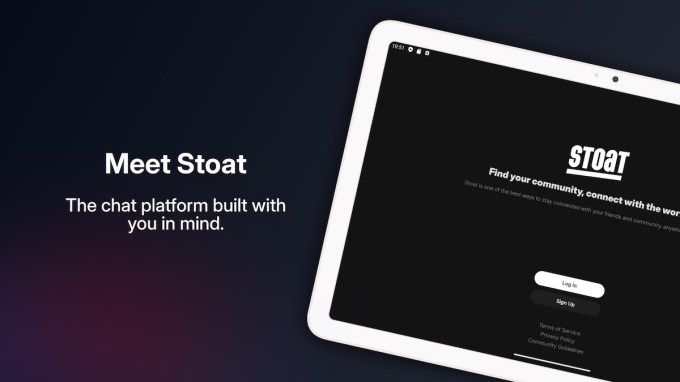
Formerly known as Revolt, Stoat offers the closest match to Discord in both visual architecture and core functionality. Because it is an open-source platform, users maintain greater control over personal data, appealing directly to privacy-focused online communities. The layout features familiar text channels, voice hubs, and server structures, allowing new users to adapt quickly.
Launched in 2021, Stoat still experiences operational challenges during high-traffic periods. The platform recently addressed server capacity issues and temporary latency caused by traffic spikes. While its feature list remains smaller than Discord’s, Stoat serves as a viable option for those willing to accept minor instability in exchange for greater privacy transparency.
Element: Decentralized Encrypted Messaging
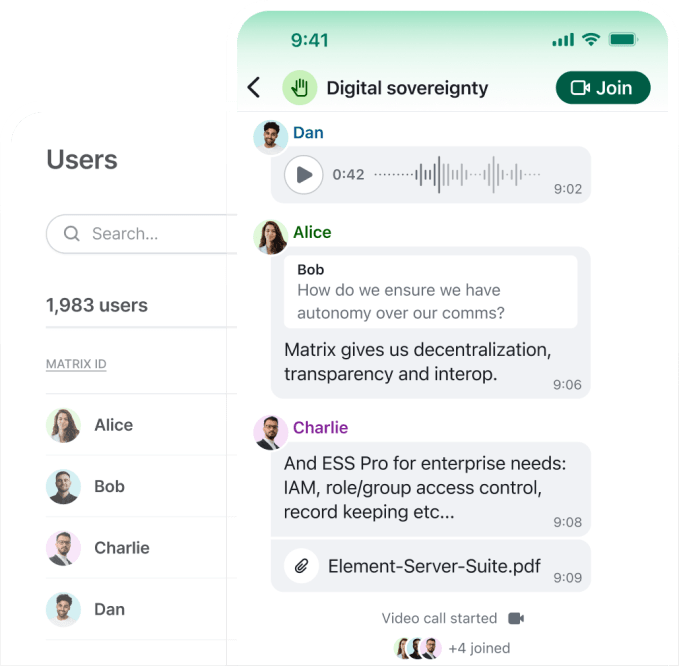
Built on the open Matrix protocol, Element provides end-to-end encryption and decentralized server hosting. This structure prevents any single corporate entity from holding ownership or administrative access to user data. Users can self-host private servers and federate across different Matrix-based services.
The initial setup and user interface demand more technical knowledge than standard commercial chat apps. Despite the learning curve, Element remains a leading option for organizations that require secure and autonomous communications.
TeamSpeak: Low-Latency Audio for Gamers
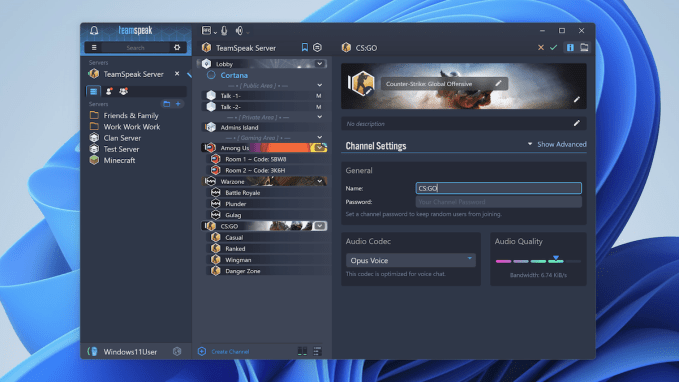
For players requiring high-fidelity voice transmission with minimal lag, TeamSpeak remains the industry standard. Highly favored in competitive esports environments, it focuses strictly on clear voice connections and self-hosted private servers. It lacks native video calls, integrated GIF searching, and extensive text formatting tools.
Driven by a recent surge in new users, TeamSpeak expanded its infrastructure in February by opening two new server creation regions: “Frankfurt 3” and “Toronto 1.”
Mumble: Lightweight Voice Infrastructure
Mumble is a free, open-source audio communication utility. Like TeamSpeak, it delivers clear, low-latency voice performance while granting users full control over private server management. However, its user interface is dated and omits modern features such as native screen sharing, media streaming, or complex text channel management.
Discourse: Forum-Style Long-Form Discussions
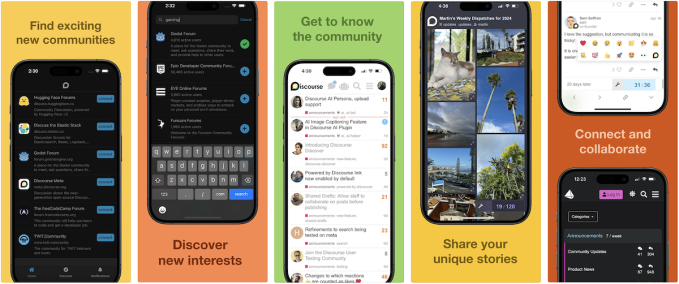
Communities prioritizing structured topic threads over real-time chat streams can use Discourse. As an open-source platform, Discourse centers on organized asynchronous conversations, making it well-suited for educational groups, technical projects, and professional organizations. It does not natively support real-time voice channels or instant chat capabilities.
Productivity and Consumer Chat Apps
Several mainstream messaging services can also fulfill specific group communication needs:
Slack and Microsoft Teams
Designed primarily for enterprise environments, these platforms provide structured text channels, file sharing, and video calling suited for project coordination.
Signal and WhatsApp
Signal offers strict end-to-end encryption for private messaging, while WhatsApp provides free cross-platform messaging and group voice calls. Neither platform offers server-based community structures designed for large gaming groups.
Understanding Discord’s Age Verification Timeline
Discord’s upcoming age verification mandate aims to restrict underage users from accessing adult content channels. The protocol requires users seeking adult access to verify their age through government ID uploads, credit card validation, or facial age estimation scans.
Accounts will operate under a restricted “teen-appropriate” baseline profile by default. Only users who successfully pass verification can unlock age-restricted servers or unblur sensitive content.
Following significant user pushback regarding data collection, Discord delayed the official deployment from its original March launch window to the second half of 2026. Discord reported that roughly 90% of its user base will not require age verification, as their activities do not involve age-restricted content hubs.










Leave a Reply