
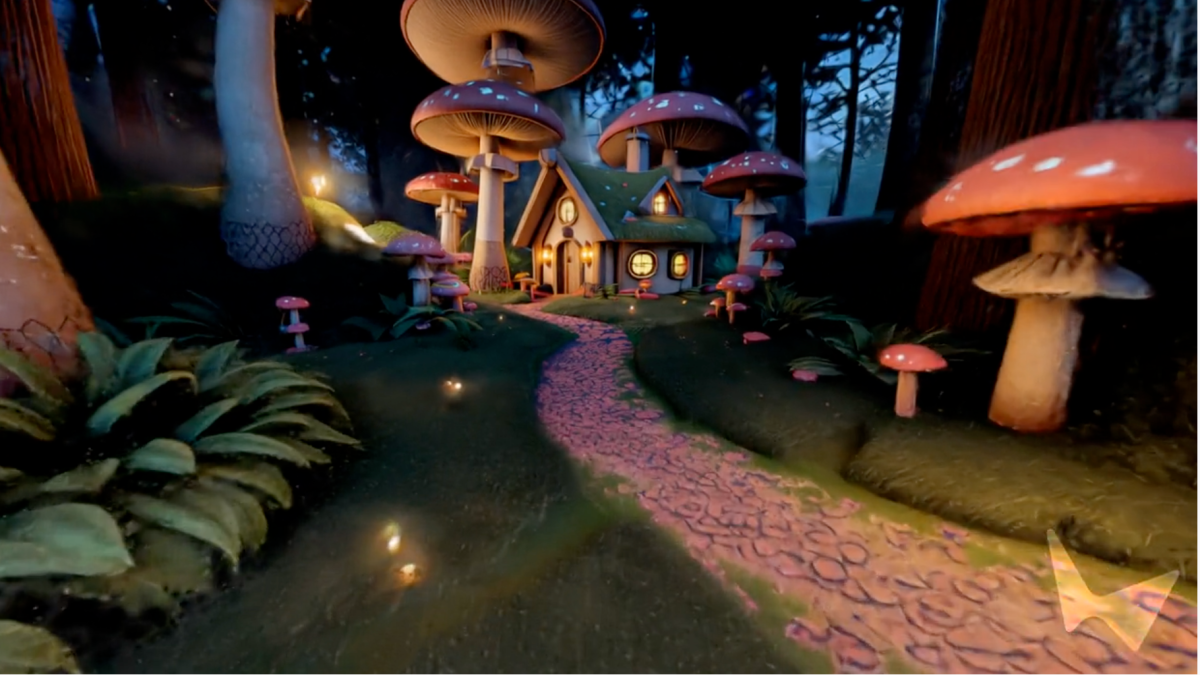
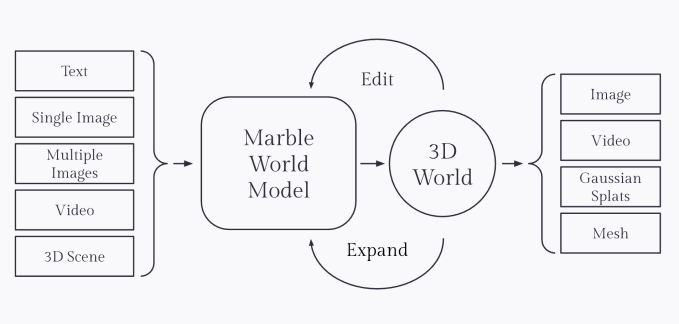
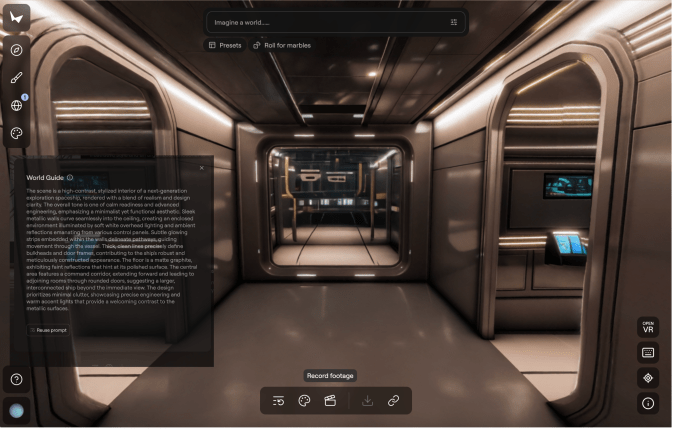
AI pioneer Fei-Fei Li’s startup, World Labs, officially launched its first commercial product today, releasing Marble to allow users to generate editable, downloadable 3D environments from text prompts, photos, videos, panoramas, and spatial layouts.
A New Standard in Generative 3D Environments
The commercial debut of Marble, which entered a limited beta preview two months ago, comes just over a year after World Labs emerged from stealth backed by $230 million in funding. The release places the startup ahead of competitors in the race to build functional world models—AI systems designed to create internal spatial representations of environments to predict outcomes and assist in planning actions.
While rivals such as Decart and Odyssey have distributed free demos and Google’s Genie remains in a restricted research phase, Marble takes a distinct technical path. Unlike real-time spatial generators—including World Labs’ own real-time model, RTFM—Marble constructs persistent, fixed 3D environments rather than streaming frame-by-frame outputs on the fly. This architecture reduces visual morphing and allows creators to export environments as Gaussian splats, textured meshes, or video files.
Marble is also the first model in its class to integrate AI-native editing tools alongside a hybrid 3D editor, enabling creators to map out core spatial structures before the model populates the visual details.
“This is a brand new category of model that’s generating 3D worlds, and this is something that’s going to get better over time. It’s something we’ve already improved quite a lot,” Justin Johnson, co-founder of World Labs, stated.
Hands-On Performance and Granular Creative Control
In December, World Labs demonstrated early prototypes capable of turning single images into interactive 3D scenes. Though groundbreaking, those initial environments featured cartoonish aesthetics, restricted movement boundaries, and occasional rendering artifacts.
Testing during the recent beta preview demonstrated that Marble can create compelling environments ranging from stylized game worlds to highly detailed digital representations of real-world spaces. While perimeter morphing was visible in earlier iterations, World Labs refined rendering quality for the commercial build, though prompt fidelity can vary between model updates.
Granular user control remains a core design priority for the developer team moving forward.
“One of our main themes for Marble going forward is creative control,” Johnson noted. “There should always be a quick pathway to generate something, but you should be able to dive even deeper and get a lot of control over the things that you’re generating. You don’t want the machine to just take the wheel and pull all that creativity away from you.”
Key Features: Multi-Input, Chisel, and Expansion Modes
Marble expands creative options by updating its input pipeline. While the beta relied on single static photos—requiring the model to estimate unseen 360-degree angles—the commercial release accepts multiple images or short video clips to construct realistic digital twins from various perspectives.
The platform also introduces Chisel, an experimental spatial editor. Chisel separates structure from style in a manner similar to how HTML defines site architecture while CSS handles presentation. Users block out primitive geometric shapes—such as walls, boxes, or ground planes—and apply text prompts to define visual textures. Unlike text-only generation, Chisel enables direct object manipulation in 3D space.
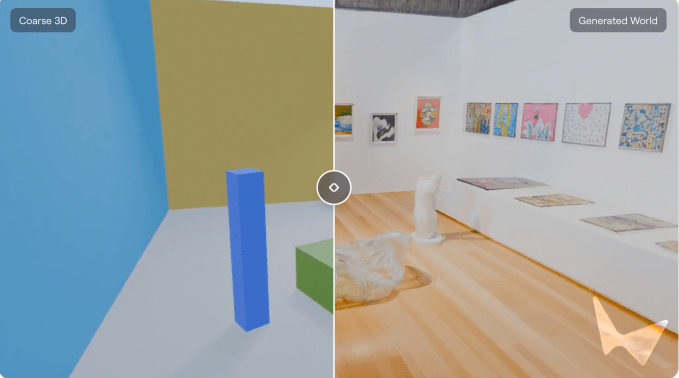
“I can just go in there and grab the 3D block that represents the couch and move it somewhere else,” Johnson explained.
For scene scaling, Marble offers an expansion feature. Users can extend a generated world outward when approaching its outer boundaries, directing the AI to render additional spatial details in adjacent areas. To build larger environments, a separate “composer mode” allows creators to merge multiple distinct generated scenes into a single project.
Pricing Tiers and Industry Applications
World Labs is commercializing Marble across four subscription tiers:
- Free: Offers four scene generations using text, image, or panorama inputs.
- Standard ($20/month): Includes 12 generations, multi-image/video input capabilities, and advanced editing features.
- Pro ($35/month): Provides 25 generations, scene expansion controls, and commercial usage rights.
- Max ($95/month): Delivers 75 generations alongside full access to all features.
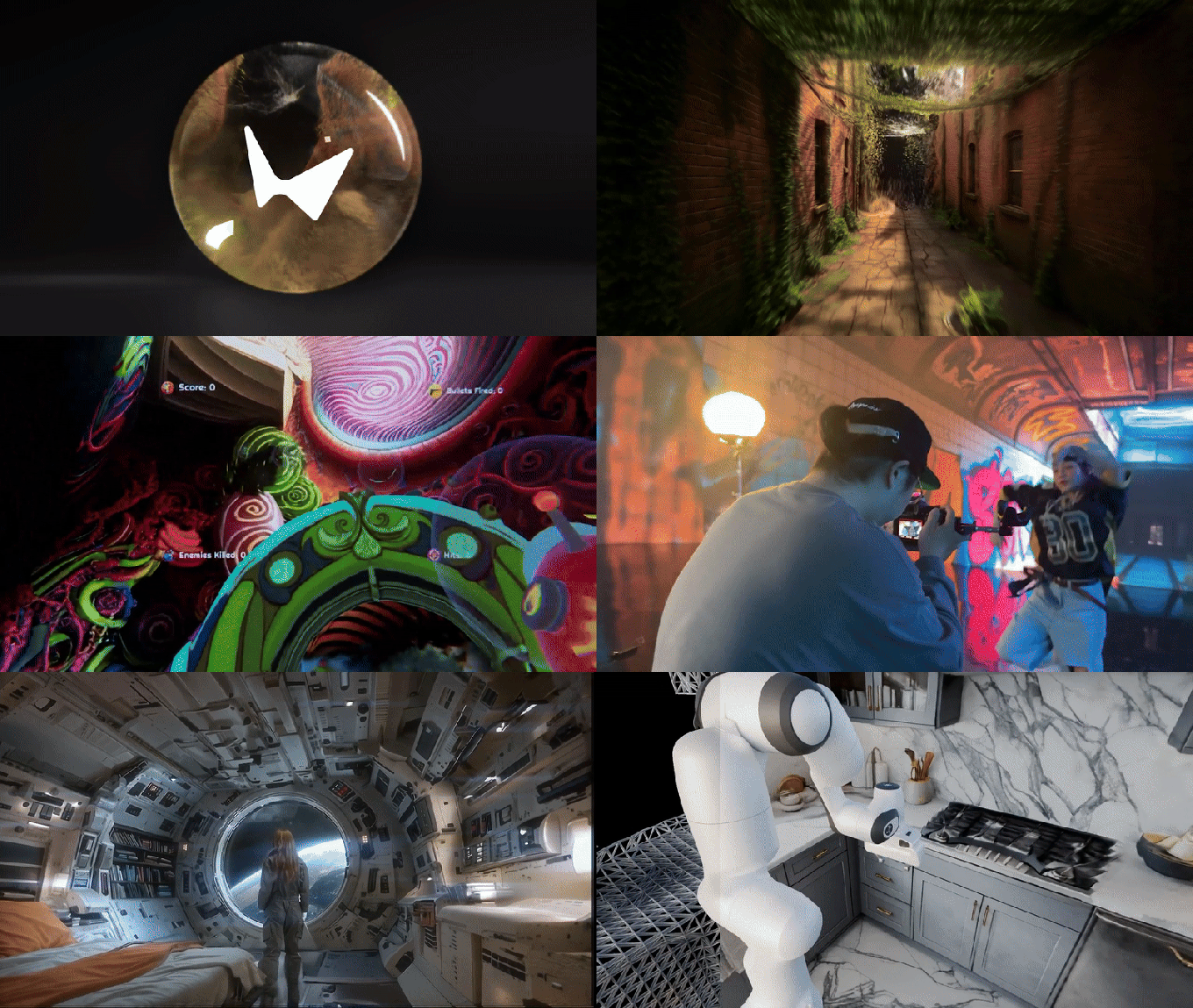
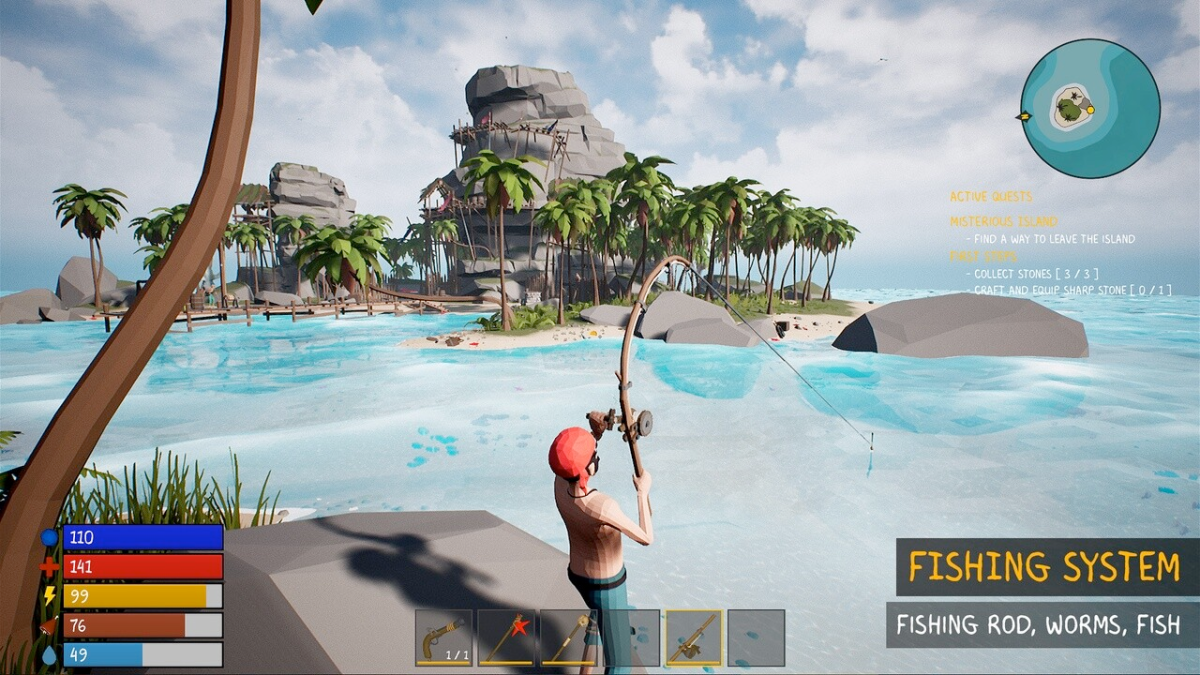
World Labs targets gaming, visual effects (VFX), and virtual reality (VR) as initial commercial verticals.
The integration of generative AI within game production remains contested. A recent Game Developers Conference survey revealed that one-third of industry respondents view generative AI as detrimental to game development—a 12% increase year-over-year—citing intellectual property rights, high energy consumption, and quality concerns. Additionally, a Wired report highlighted instances of major studios using AI tools to streamline production staff.
Rather than replacing game engine frameworks, Johnson positions Marble as a tool to streamline asset generation. Developers can generate background environments and ambient spaces within Marble, then export those 3D assets directly into game engines like Unity or Unreal Engine to write game logic, code, and interactive systems.
“It’s not designed to replace the entire existing pipeline for gaming, but to just give you assets that you can drop into that pipeline,” Johnson explained.
In VFX workflows, Marble avoids temporal inconsistencies common in AI video generators. Exportable 3D environments allow artists to position camera paths with precise control across individual frames.
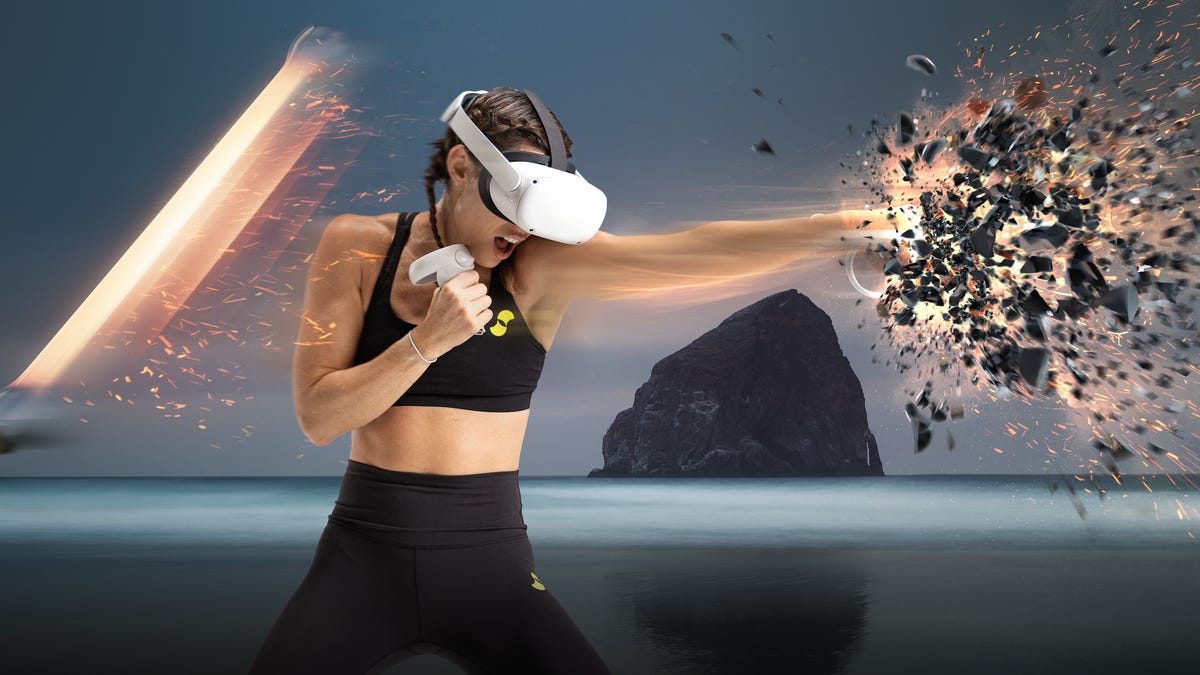
Though World Labs is not building dedicated VR software, Marble generated environments are natively viewable in virtual reality platforms today, supporting headsets such as the Apple Vision Pro and Meta Quest 3. Beyond media creation, Marble offer synthetic scene generation capabilities for robotics, helping train autonomous systems where real-world training data is limited.
Building Towards Spatial Intelligence
According to a recent statement by World Labs CEO Fei-Fei Li, Marble represents an foundational step toward broader spatial intelligence in artificial intelligence.
Li emphasizes that while large language models trained machines to read and compose text, spatial world models aim to teach systems to perceive and build physical structures. Mastery over three-dimensional space could ultimately extend beyond digital environments into fields such as scientific modeling, medicine, and advanced robotics.
“Our dreams of truly intelligent machines will not be complete without spatial intelligence,” Li wrote.








Leave a Reply