
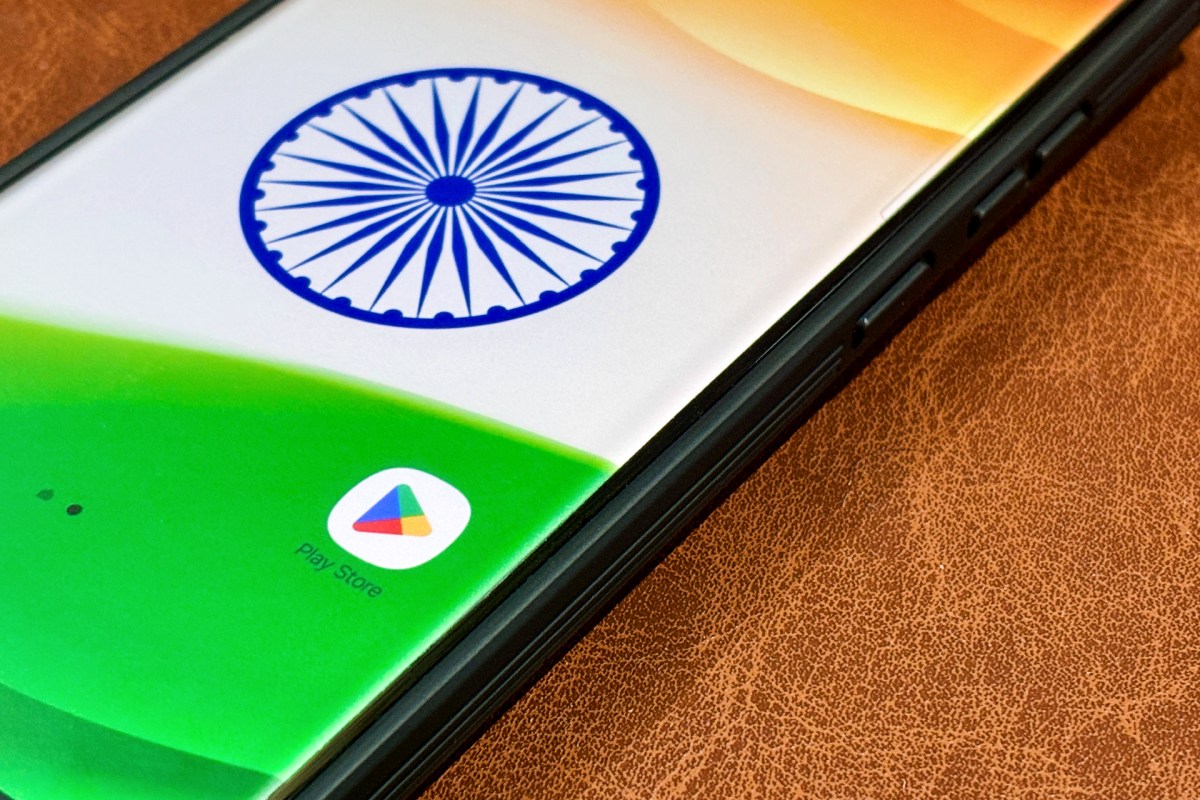
Google submitted a proposed policy overhaul to India’s antitrust regulator on Wednesday to allow all legal real-money gaming apps onto the Play Store and Google Ads, seeking to settle an ongoing antitrust investigation initiated by local platform WinZO.
In a public notice published on Wednesday, the Competition Commission of India (CCI) invited industry comments on Google’s “commitment proposal.” The tech giant offers to expand access to both its marketplace and advertising framework for developers operating real-money gaming (RMG) apps across the South Asian market.
A Shift From Pilot Restrictions to Open Access
Under the proposal, Google intends to phase out its limited pilot framework and permit any real-money game that developers self-declare as legally permissible under applicable Indian laws and jurisprudence. However, self-declaration alone will not suffice: developers must also present verification from an authoritative third-party body proving that their application qualifies specifically as a “game of skill.”
Legal Battles and WinZO’s Antitrust Complaint
This regulatory shift follows years of friction within India’s gaming market. In September 2022, Google established a restricted pilot program allowing only daily fantasy sports and rummy apps on the Play Store. That decision stemmed from a 2021 Supreme Court of India ruling that classified fantasy sports as skill-based contests rather than gambling, rendering them legal under national law.
The limited scope triggered immediate opposition. Indian gaming platform WinZO filed a lawsuit in the Delhi High Court shortly after the pilot’s launch, calling Google’s selective inclusion discriminatory. The CCI subsequently launched a probe and, in November last year, ordered a formal investigation into Google’s real-money gaming app policies.
Google had previously signaled plans in January 2023 to broaden support for RMG apps across India, Brazil, and Mexico. However, the company paused that international rollout in June 2024, maintaining access only for apps already participating in the initial 2022 Indian pilot.
New Developer Guidelines and Advertising Rules
Along with opening Play Store distribution to self-declared RMG developers, Google plans to modify its Developer Program Policies to reflect the broader framework and establish an “appropriate business model” for real-money gaming companies on the platform.
The proposed changes extend to Google’s advertising network. Developers of “games of skill” will be permitted to run promotional campaigns in India if they supply third-party validation confirming their product does not constitute gambling. Approved evaluating entities would include recognized industry groups like the All India Gaming Federation, the E-Gaming Federation, or the Federation of Indian Fantasy Sports.
Execution Timeline and Regulatory Approval
Subject to final approval from the CCI, Google stated that compliant real-money games would gain entry to the Play Store within 120 days of the regulator’s order. Corresponding advertising policy updates would go into effect within 150 days.
“We’re pleased the CCI is market testing our proposed framework for real-money games (RMGs) in India,” a Google spokesperson said in a statement emailed to TechCrunch. “This development reflects our constructive discussions with the CCI and the Indian developer community along with our commitment to building a more open and safe ecosystem for RMG apps across Google Play and Google Ads.”
Market Impact: A $3 Billion Gaming Sector
Regulatory acceptance of the proposal stands to generate substantial financial benefits for Google, enabling the company to collect service fees and advertising revenue across a significantly wider range of gaming products.
Real-money titles represent the core driver of India’s online gaming economy. RMG apps accounted for nearly 86% of total industry revenue in 2024—generating ₹274.38 billion ($3 billion)—according to a joint report from WinZO and the Interactive Entertainment and Innovation Council (IEIC). While non-real-money titles are projected to expand market diversity, RMG is still expected to hold an 80% share of a predicted ₹785.51 billion ($8.9 billion) sector by 2029.
For independent developers currently forced to distribute their Android apps through direct APK downloads on their own websites, Play Store inclusion offers a major distribution upgrade. Nevertheless, the CCI’s antitrust investigation remains active, and the authority has not yet issued a ruling on whether Google’s past practices constituted market abuse.
This inquiry forms part of a broader set of legal hurdles facing Google in India, where regulators have previously fined the company over Android and Play Store dominance. Google recently petitioned the Supreme Court to challenge an earlier adverse finding by the CCI, with hearings slated to resume next month.
“We look forward to continuing to work with the CCI and the wider RMG ecosystem, and are confident our proposed framework will empower Indian developers, grow the digital economy, and prioritize user safety,” Google’s spokesperson added.





Leave a Reply