
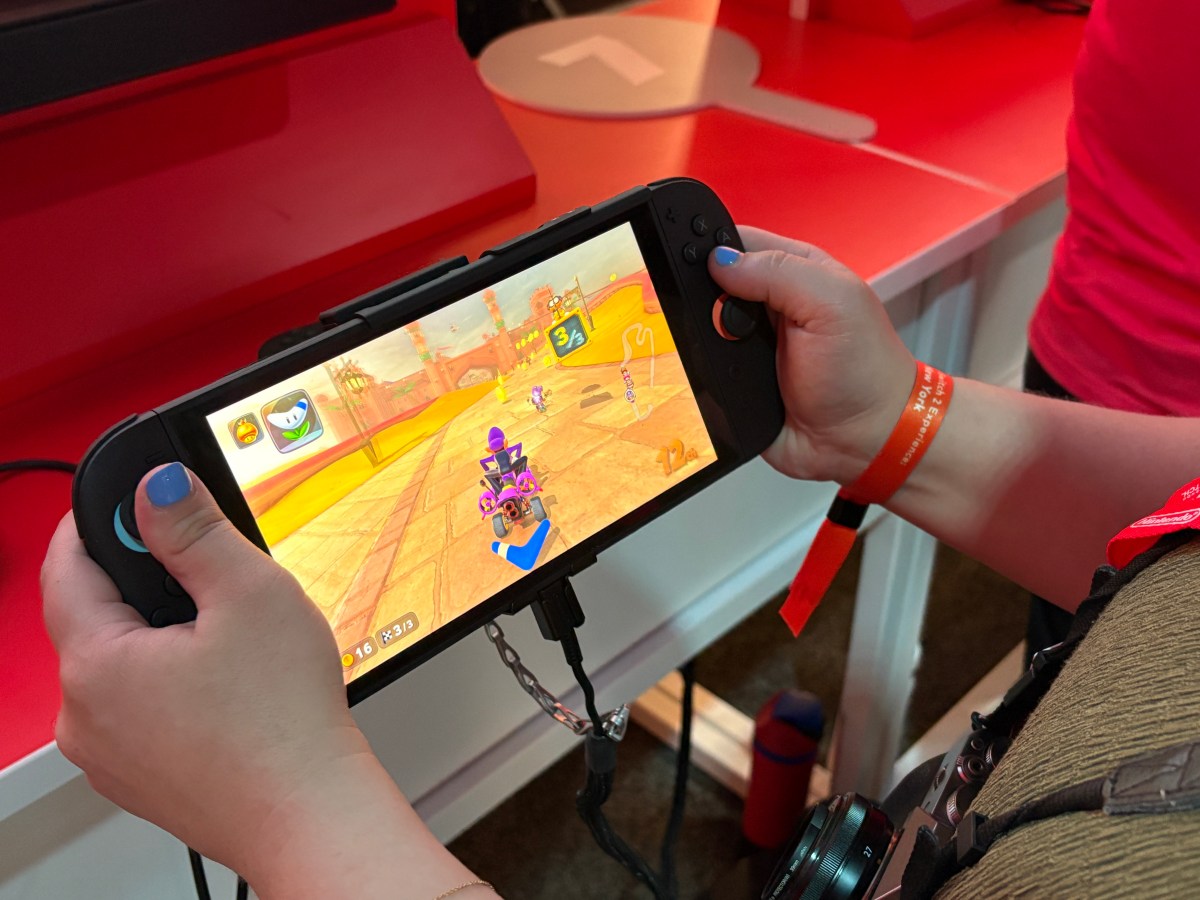
Nintendo has officially revealed the Nintendo Switch 2 at a recent preview event, showcasing a refined handheld console designed to elevate the original system’s core strengths through better hardware, larger displays, and innovative controller mechanics.
From “Super Nintendo Switch” to the Official Sequel
During the hardware presentation, veteran producer Kouichi Kawamoto admitted that the team briefly contemplated calling the device the “Super Nintendo Switch.” The title would have served as a historic homage to the Super Nintendo Entertainment System (SNES), which succeeded the original NES roughly 35 years ago. However, Kawamoto alongside directors Tetsuya Sasaki and Takuhiro Dohta decided that the moniker didn’t quite capture the console’s identity. Rather than reinventing the wheel, the Switch 2 focuses on perfecting an already immensely popular formula.
Development on the hardware successor kicked off back in 2019. While the original Switch launched in 2017, sales spiked dramatically during the 2020 COVID-19 pandemic, with system sales doubling year-over-year. That unprecedented surge created severe production bottlenecks that Nintendo worked aggressively to solve. Long-standing semiconductor shortages, compounded by the current generative AI boom, continue to impact hardware supply chains. Given that both the original console and the Switch 2 rely on customized Nvidia processors, navigating these component constraints played a direct role in shaping the release timeline.
Hardware Upgrades: Bigger Screen, 4K Docking, and Storage
In terms of physical dimensions, the Nintendo Switch 2 expands slightly over its predecessor. Measuring 4.5 inches tall by 10.7 inches wide with attached Joy-Cons, the new unit adds roughly an inch in length and half an inch in height while retaining a similar thickness and minimal weight increase. Holding the console feels like upgrading to a newer smartphone model; the adjustment period is fast and natural.
The screen sees a noticeable jump to a 7.9-inch 1080p LCD panel capable of a 120Hz refresh rate. While OLED enthusiasts might feel slight disappointment over the LCD choice, docked performance delivers resolutions up to 4K at 60Hz on compatible televisions, alongside HDR10 support and Variable Refresh Rate (VRR) capabilities. Visually, games like The Legend of Zelda: Tears of the Kingdom and Hades II show dramatic improvements in texture quality, character models, and frame stability.
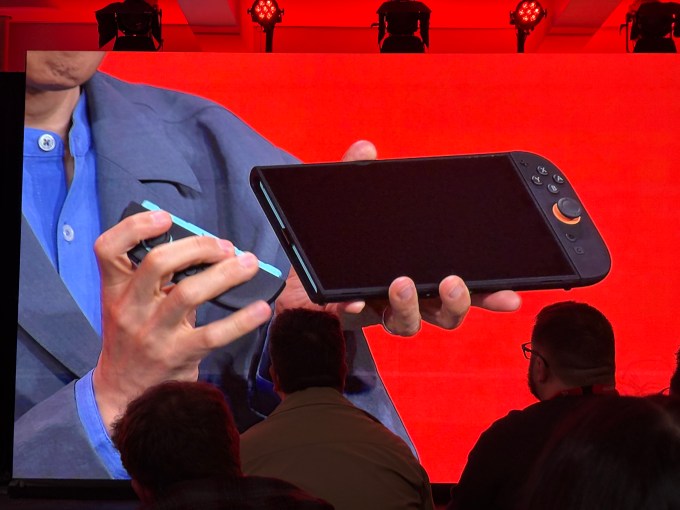
Internal storage receives a long-overdue bump to 256 GB, accompanied by a redesigned, sturdier kickstand. Battery performance, however, sees a slight tradeoff due to power-hungry new features like built-in GameChat. Nintendo estimates battery life between 2 and 6.5 hours depending on usage, compared to the original system’s 4.5 to 9 hours. A newly positioned top USB-C port makes charging while playing far more convenient in handheld mode.
Redesigned Joy-Con 2 Controllers: Magnetic Attachments and Mouse Mode
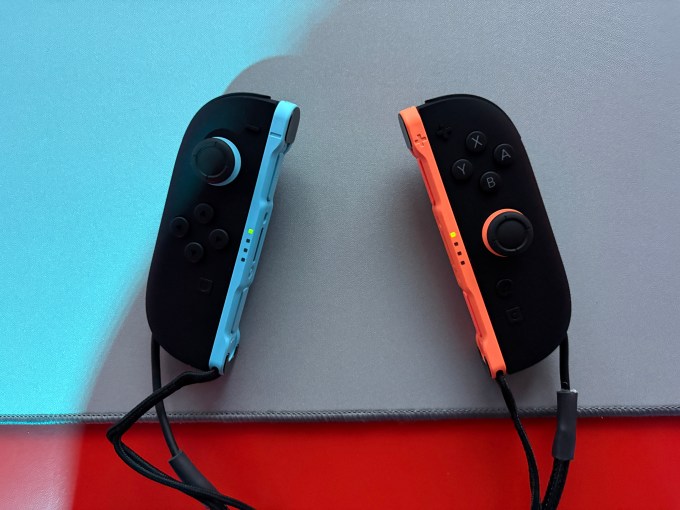
Addressing persistent issues like joystick drift, Director Tetsuya Sasaki confirmed that the new Joy-Con 2 controllers were completely reengineered from scratch to deliver smoother input and greater range of motion. The physical connection mechanism now uses high-strength magnets instead of traditional sliding rails. To detach the controllers, users press a rear release button; the magnetic joint is designed with flexibility to absorb kinetic force and protect internal connectors if dropped.
The most revolutionary addition to the Joy-Con 2 line is built-in optical mouse functionality. Equipped with mouse sensors, gyroscopes, and accelerometers, the right controller can function like a desktop mouse on smooth surfaces—or even across a player’s pant leg. In the 3-on-3 wheelchair basketball demo Drag x Drive, players slide the controllers back and forth to simulate wheels and flick their wrists to shoot. More impressively, first-person shooters like Metroid Prime 4: Beyond allow players to seamlessly transition to mouse motion for precise aiming, bridging the gap between PC and console control schemes. Legacy Joy-Cons remain compatible over Bluetooth for wireless play, though they cannot physically dock to the Switch 2 body.
Upcoming Titles: Mario Kart World and Donkey Kong Bananza
Nintendo showcased several major titles designed to leverage the updated hardware. Mario Kart World introduces a seamlessly connected open-world structure where 24-player Grand Prix races transition fluidly across various track locations without loading breaks. Between matches, players can freely explore the surrounding terrain, drive through water, and discover hidden areas. The roster even features new additions like a playable cow character and an aristocratic variant of Boo.
Meanwhile, Donkey Kong Bananza marks the character’s first 3D platforming adventure in over a decade. Players can manipulate the environment by tearing up terrain to throw at flying enemies, engage in melee combat, and interact with classic characters like Diddy Kong. Additionally, an attachable camera accessory introduces interactive features for social applications like GameChat and motion-tracking minigames in titles like Super Mario Party Jamboree, while supplying a second built-in USB-C port.
Is the $450 Price Tag Worth the Investment?
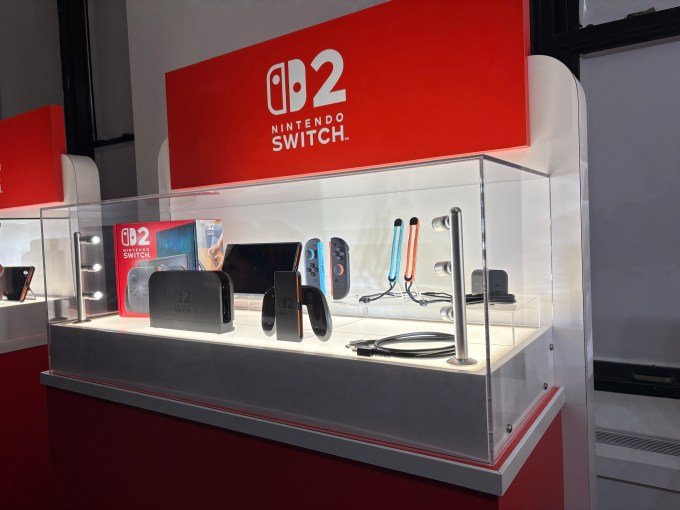
Priced at $450, the Nintendo Switch 2 enters the market at a higher price point than its $300 predecessors. When compared to handheld PCs like the Steam Deck—which starts at $400 plus $79 for a TV dock—the pricing aligns with current hardware trends and inflation. The package includes enhanced visual capabilities, modernized controllers, expanded storage, and strong third-party support including titles like Elden Ring: Tarnished Edition, Cyberpunk 2077 Ultimate Edition, Yakuza 0, and the exclusive The Duskbloods from FromSoftware.
For casual gamers satisfied with their current library, waiting might be a reasonable option. However, given Nintendo’s history of maintaining hardware pricing without frequent discounts, early adopters looking to play upcoming exclusives like Mario Kart World or Metroid Prime 4: Beyond will find significant value in upgrading right at launch.



Leave a Reply