
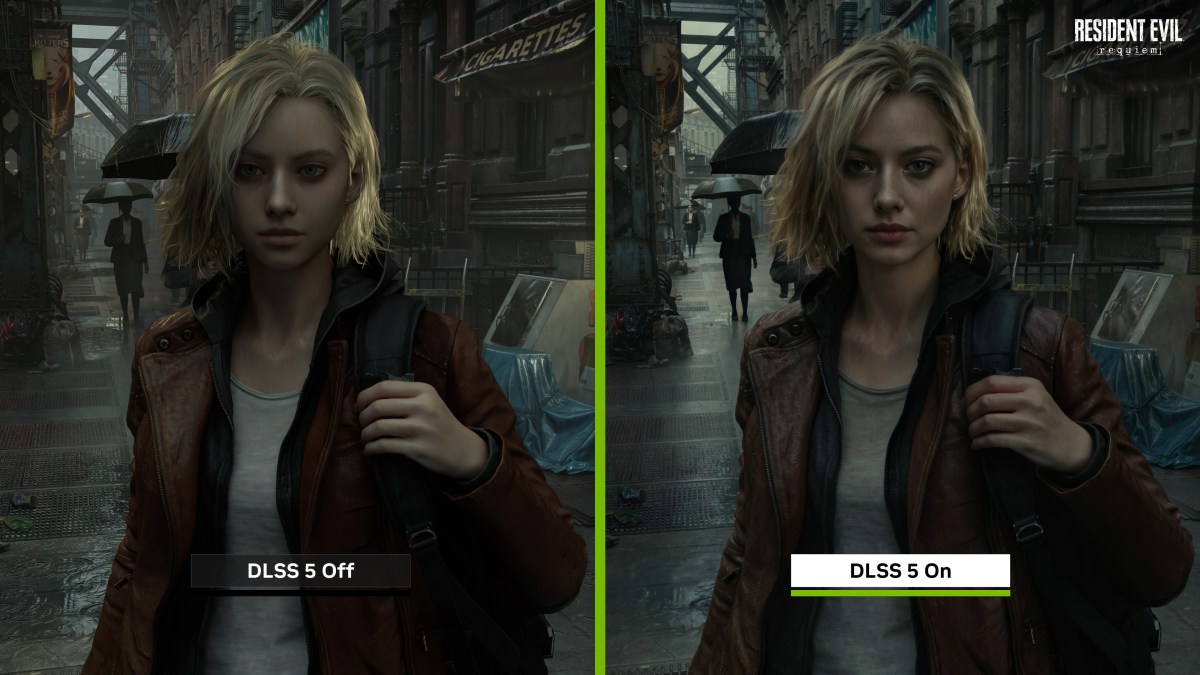
Nvidia CEO Jensen Huang introduced DLSS 5 during his keynote address at Nvidia GTC on Monday, unveiling a next-generation AI graphics technology that fuses traditional 3D rendering with generative AI to deliver photorealistic visuals while drastically cutting computational demands.
A Hybrid Approach to Next-Generation Rendering
The newly announced DLSS 5 framework blends structured 3D graphics data with predictive generative AI models. By anticipating and generating missing visual elements in real time, Nvidia graphics processing units can display intricate environments and lifelike character models without needing to render every individual pixel from scratch.
“We fused controllable 3D graphics, the ground truth of virtual worlds, the structured data… with generative AI, probabilistic computing,” Huang stated during the event. “One of them is completely predictive, the other one is probabilistic yet highly realistic.”
Huang emphasized that combining structured datasets with generative capabilities empowers developers to build interactive content that is visually striking, highly realistic, and fully controllable.
Expanding Beyond the Gaming Ecosystem
Although gaming represents a smaller fraction of Nvidia’s total revenue today compared to its historic dominance, the sector remains the cornerstone of the company’s technological innovations. Huang presented the underlying architecture of DLSS 5 as a broader paradigm shift in computing, indicating that this dual-database methodology will soon impact enterprise applications well beyond video games.
“This concept of fusing structured information and generative AI will repeat itself in one industry after another,” Huang noted. “Structured data is the foundation of trustworthy AI.”
The Evolution of Enterprise AI Data Processing
To illustrate the broader business implications, the chief executive highlighted enterprise data platforms like Snowflake, Databricks, and Google BigQuery as prime examples of structured environments that next-generation AI models will analyze and transform into actionable insights.
“In the future, what’s going to happen is these data structures are going to be used by AI, and AI is going to be much, much faster than us,” Huang explained. “Future agents are going to use structured databases as well as the unstructured database, the generative database. This database represents the vast majority of the world.”









Leave a Reply