
Mobile gaming giant Scopely announced Wednesday that it has agreed to acquire the gaming division of Niantic—the developer behind global hit Pokémon GO—in a transaction featuring a $3.5 billion acquisition price plus an additional $350 million in cash, delivering $3.85 billion in total value to Niantic equity holders so the company can pivot to 3D mapping technology.
Inside the $3.85 Billion Deal and Portfolio Transfer
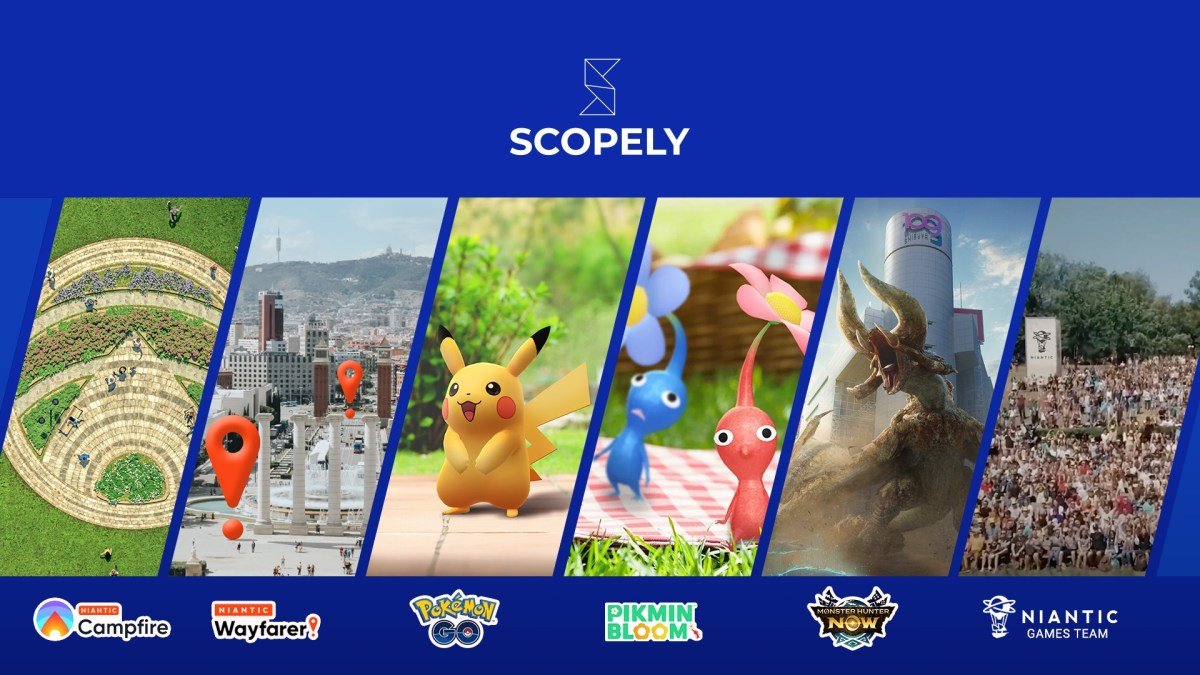
The deal transfers Niantic’s primary gaming lineup directly to Scopely. This portfolio includes the blockbuster Pokémon GO, which commands over 20 million weekly active players, along with walking title Pikmin Bloom (released in 2021), augmented reality (AR) hit Monster Hunter Now (released in 2023), community platform Campfire, and mapping tool Wayfarer.
As part of the transaction, all Niantic employees assigned to the games division will join Scopely’s existing workforce of 2,300 team members. Scopely, known for operating massively successful titles like “MONOPOLY GO!” and “Stumble Guys,” assured players that Niantic’s games, applications, and real-world events will remain true to their original spirit, though it has not yet outlined a long-term product roadmap.
“Niantic games have always been a bridge to connect people and inspire exploration, and I am confident they will continue to do both as part of Scopely. Scopely shares our focus on building and operating incredible live services, has exceptional experience working with the world’s biggest and most beloved intellectual properties, and cares deeply about its player communities and game-making teams,” said Niantic CEO and founder John Hanke in an official statement.
Niantic Spatial: A New Focus on 3D Mapping and AI
Following the divestinement, Niantic will transition into a standalone entity named Niantic Spatial, headed by John Hanke. The new company will focus entirely on building real-world 3D digital maps. Niantic Spatial will start with a $250 million cash injection, funded by $200 million from Niantic and $50 million from Scopely.
While its major commercial games shift to Scopely, Niantic Spatial will retain and continue operating Ingress Prime—a reworked version of Niantic’s debut game Ingress—alongside its virtual pet simulator Peridot.
Moving forward, Niantic Spatial will center its operations on gathering real-world location data points. The company previously updated its Scaniverse app to enable users to capture 3D models of real-world objects to feed developer databases. In late 2023, Niantic said it wanted to build a large geospatial model using machine learning to interpret physical scenes and connect them globally.
Analyst Insights: Why Niantic Sold Its Games Division
Industry experts view the deal as a strategic move for both companies given the immense financial challenges of maintaining location-based augmented reality games over extended periods.
“Scopely is solidifying its position in the mobile games space with this acquisition. The acquisition not only allows them to expand into the augmented reality and geolocation segment, but it also builds on their IP centric strategy by deepening relationships with firms like The Pokémon Company and Capcom, further positioning itself as a key partner for global IP holders,” explained Darang Candra, Director for East Asia & Southeast Asia Research at gaming analyst firm Niko Partners.
Candra noted that sustaining AR and location-based mobile games is notoriously difficult due to high ongoing development costs, frequent required content updates, and heavy reliance on top-tier intellectual property to retain users.
Replication Struggles and Financial Data
While Niantic created a cultural milestone with Pokémon GO, it routinely struggled to replicate that level of commercial success across subsequent releases. Data provided by app analytics firm Sensor Tower reveals that Pokémon GO generated more than $520 million through in-app purchases in 2024 alone. By comparison, Niantic’s second highest-earning game during the same period, Monster Hunter Now, generated $86 million, highlighting the revenue gap between Pokémon GO and the rest of the roster.
In recent months, Pokémon GO users have actively voiced dissatisfaction over the rise of paid content and aggressive monetization mechanics. Following the post-pandemic market correction, Niantic shuttered several expensive licensed projects—including high-profile titles based on Marvel, Harry Potter, and NBA franchises—and laid off hundreds of staff prior to pursuing this strategic division sale.



Leave a Reply