
High school senior Adi Singh launched Minecraft Benchmark (MC-Bench) online to evaluate top artificial intelligence models by staging direct building competitions in Minecraft, offering a transparent alternative to traditional, flawed AI testing methods.
How the MC-Bench Platform Evaluates Generative AI
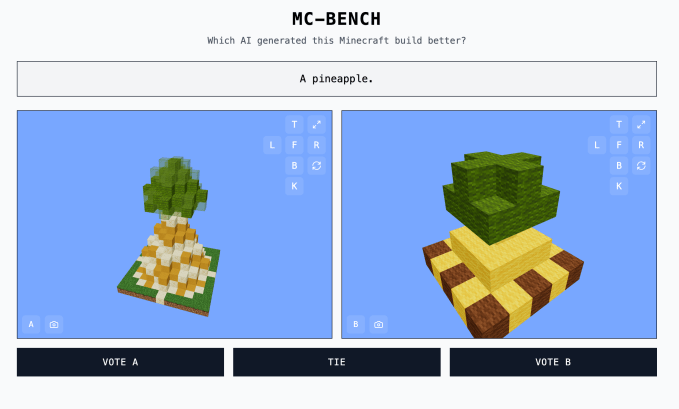
Developed collaboratively by a team of eight volunteer contributors, MC-Bench functions as an interactive arena where generative AI models face off to construct 3D objects based on specific user prompts. Platform visitors evaluate the resulting structures through blind side-by-side comparisons, revealing which model generated each design only after a vote is cast.
Major industry players—including OpenAI, Anthropic, Google, and Alibaba—have subsidized API usage costs to support the benchmark queries. However, none of these corporate entities hold operational control over the independent initiative.
Leveraging Gaming Environments for AI Agent Reasoning
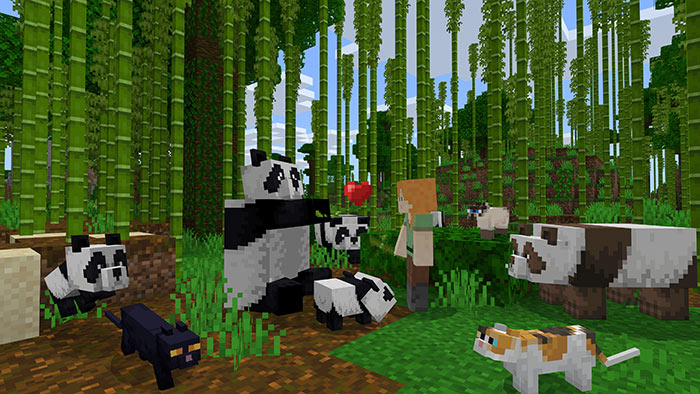
Singh selected Minecraft as a benchmark medium because of its global ubiquity. As the best-selling video game in history, its block-based mechanics allow everyday observers to intuitively judge spatial quality, such as determining which model constructed a more recognizable pixelated pineapple.
“Minecraft allows people to see the progress [of AI development] much more easily,” Singh explained. “People are used to Minecraft, used to the look and the vibe.”
The project joins other gaming environments used to test model capabilities, including Pokémon Red, Street Fighter, and Pictionary. Singh plans to expand the project beyond simple static structures into complex, multi-step planning tasks.
“Currently we are just doing simple builds to reflect on how far we’ve come from the GPT-3 era, but [we] could see ourselves scaling to these longer-form plans and goal-oriented tasks,” Singh stated. “Games might just be a medium to test agentic reasoning that is safer than in real life and more controllable for testing purposes, making it more ideal in my eyes.”
The Hidden Shortcomings of Traditional AI Benchmarks
Standardized corporate testing metrics often skew results because models excel at narrow, memorization-heavy tasks. A model might achieve an elite score on professional exams while struggling with elementary logic or basic counting challenges.
For instance, OpenAI’s GPT-4 scores in the 88th percentile on the LSAT exam despite struggling to count the letters in simple words. Similarly, Anthropic’s Claude 3.7 Sonnet reached 62.3% accuracy on complex software engineering evaluations, yet displays basic tactical failures when tasked with navigating classic game mechanics.
How Visual Scoring Translates to Real-World Performance
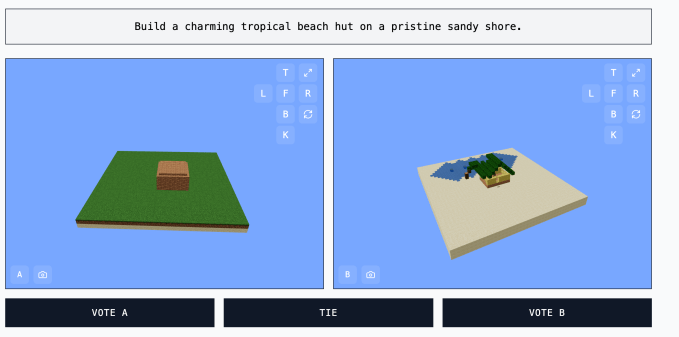
Under the hood, MC-Bench tests execution power by requiring AI models to generate raw programmatic code to construct requested builds—ranging from “Frosty the Snowman” to “a charming tropical beach hut on a pristine sandy shore.”
Evaluating physical render quality provides a far more accessible metric for non-technical evaluators than auditing code directly. This accessibility allows the platform to gather higher volumes of user feedback, building a robust public leaderboard.
“The current leaderboard reflects quite closely to my own experience of using these models, which is unlike a lot of pure text benchmarks,” Singh noted. “Maybe [MC-Bench] could be useful to companies to know if they’re heading in the right direction.”







Leave a Reply