
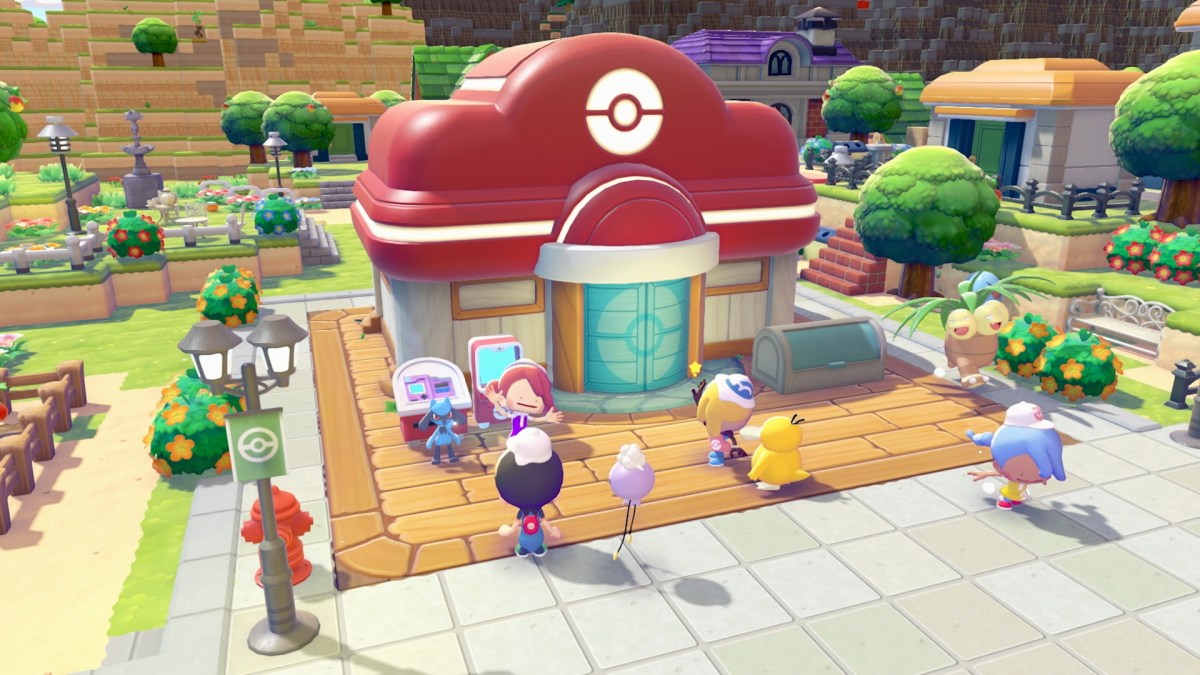
Nintendo’s newly released cozy life-simulator, Pokémon Pokopia, is taking the gaming world by storm on the Switch 2, captivating players with its addictive blend of habitat restoration and unexpectedly deep ecological themes. Set in a post-apocalyptic version of the classic Kanto region, the game challenges players to rebuild a ruined world from the ground up, delivering an experience unlike anything previously seen in the 30-year history of the franchise.
An Addictive Blend of Cozy Crafting and Narrative Charm
The core gameplay loop centers on constructing tailored habitats to improve the comfort levels of various Pokémon companions. The experience is packed with whimsical yet engaging quests: consulting Professor Tangrowth on the definition of a “party,” throwing a rain-inducing celebration to soften cave walls and free an embedded Onix, or awakening Kyogre. When the resulting rain puts out Charmander’s tail flame, players must collaborate with allies like Timburr and Hitmonchan to construct immediate shelter.
This level of detailed environmental management makes the title exceptionally easy to get lost in. Players report becoming completely absorbed in granular tasks—such as restoring a seaside sanctuary for Magikarp—often losing track of time entirely during late-night gaming sessions while companions fall asleep beside them.
Combining mechanics reminiscent of Animal Crossing, Stardew Valley, and Minecraft, the title successfully maintains a surprisingly cozy atmosphere despite its bleak post-apocalyptic setting.
Market Demands and Hardware Driving Switch 2 Upgrades
The demand for the title has rapidly outpaced initial supply expectations. Severe stock constraints prompted retailers like Amazon to raise physical copy prices to $80 from the standard $70 digital listing. Crucially, it stands out as the first major Switch 2 exclusive game generating sufficient mainstream buzz to convince players to upgrade to Nintendo’s next-generation console.
This widespread enthusiasm marks a stark departure from recent mainline releases. Titles such as Pokémon Scarlet and Pokémon Violet faced criticism for technical glitches and uninspired open-world designs that struggled to hold long-term player attention after the main story concluded. In contrast, this new release offers an expansive design across four distinct regions, plus a sandbox version of Pallet Town for group play, boasting tens of hours of main story gameplay with potential for future DLC expansions.
A Darker Kanto: Environmental Ruin Meets Satirical Lore
Unlike traditional cozy titles that serve as pure escapism, the narrative foundation here is visibly anchored in real-world anxieties. Players take on the role of a Ditto that has shape-shifted into the form of its missing trainer. Human civilization has vanished entirely, leaving creatures like Professor Tangrowth alone for years in ruined landscapes.
Through scattered diary entries, old newspaper clippings, and abandoned letters, players slowly piece together the environmental collapse that caused humanity’s disappearance. The landscape reflects this tragedy: Pikachu appears as “Peakychu,” a drained, pale version of itself that has lost the ability to generate electricity, while Snorlax lies dormant inside a cave, completely overgrown with moss.

A Sharp Commentary on Modern Infrastructure Crises
The lore embedded within the world mirrors modern infrastructure and technological concerns with remarkable precision. One collectible note from an abandoned Poké Mart details the collapse of global music streaming platforms due to skyrocketing server costs, forcing society to return to physical CDs.
This fictional collapse directly echoes real-world challenges, such as the rapid expansion of resource-intensive infrastructure where nearly 3,000 energy-hungry data centers are currently under construction in the U.S. alongside 4,000 existing facilities. The resulting hardware demands have even pushed computer memory prices up significantly on modern hardware.
By blending real-world commentary on climate and technology with rewarding mechanics—such as working alongside Pokémon to restore electricity to the overgrown ruins of Vermilion City—the title delivers a unique sense of accomplishment. Rebuilding its broken world provides players with a deeply satisfying sense of purpose.











Leave a Reply